
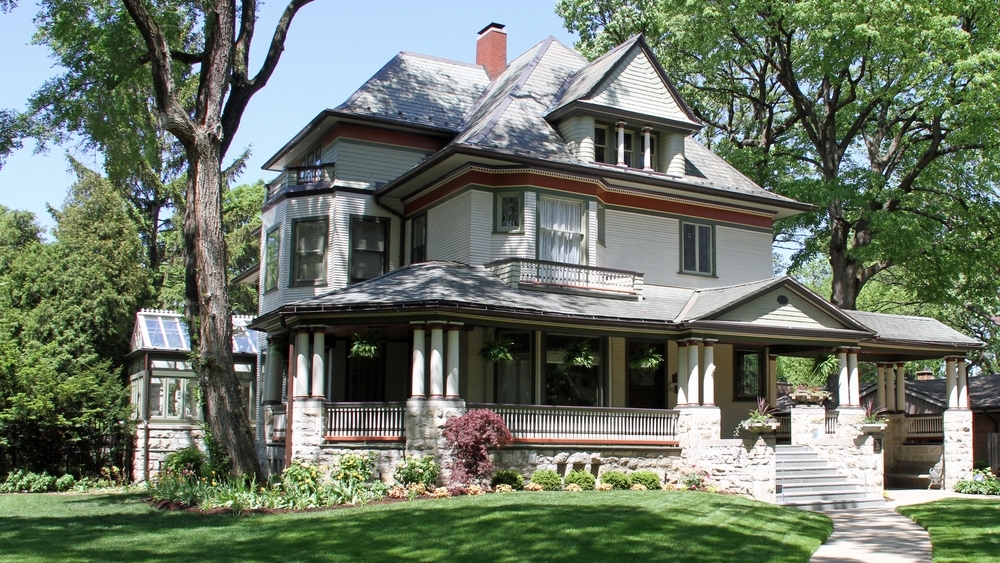
While ownership of historic homes can be appealing, it’s definitely not for everyone. Historic homes have their own set of challenges and responsibilities. Here’s a look at the joys and frustrations of owning a piece of history.
What qualifies as historic? Historic homes are recognized by an agency or organization such as the U.S. Department of the Interior, the National Register of Historic Places or other state and local historical societies. Typically a home is designated because it is associated with a famous person or historical event, or the architecture is noteworthy and needs to be preserved.
Before purchasing, find out from the governing agency if renovations and use of the property are restricted. Repairs and replacements are typically permitted but owners may not be permitted to renovate in such a way that significantly changes the interior plan or the outer appearance.
The benefits of owning an historic home. The old saying is true: They don’t make them like they used to. The architecture, the attention to detail and the solid craftsmanship of historic homes have a lasting value. Sometimes, historic homeowners will receive tax abatements as an incentive to keep the historic property in good condition. Additionally, historic homes are typically in mature neighborhoods, with large shade trees and peaceful environments. There’s a restful atmosphere in historic home districts.
Costs of ownership. As idyllic sounding as it might be to live in a piece of history, significant costs are associated with aging homes. Structural issues are one potential problem. Before purchasing, find an inspector that specializes in old homes who can do structural engineering analysis. You may have to weigh whether the home is worth the cost of repairs. In aging homes, you also must look out for health and safety issues, such as the existence of lead-based paint, lead plumbing and asbestos. Removing and replacement costs are significant.
Check the utility bills. Older homes were built before the age of energy efficiency. Ask for one year’s worth of utility bills to see how the house fares in terms of costs.
The sewage goes where? It’s possible that the original sewage system for the home was a cesspool or septic tank out in the yard. If the house is not in an area where it can be connected to city sewage, then you’ll need to make sure the sewage system is up to date and will pass health department inspection.

 Based on information from California Regional Multiple Listing Service, Inc. as of September 22, 2026 9:52 AM UTC This information is for your personal, non-commercial use and may not be used for any purpose other than to identify prospective properties you may be interested in purchasing. Display of MLS data is usually deemed reliable but is NOT guaranteed accurate by the MLS. Buyers are responsible for verifying the accuracy of all information and should investigate the data themselves or retain appropriate professionals. Information from sources other than the Listing Agent may have been included in the MLS data. Unless otherwise specified in writing, Broker/Agent has not and will not verify any information obtained from other sources. The Broker/Agent providing the information contained herein may or may not have been the Listing and/or Selling Agent.
 This information is deemed reliable but not guaranteed. You should rely on this information only to decide whether or not to further investigate a particular property. BEFORE MAKING ANY OTHER DECISION, YOU SHOULD PERSONALLY INVESTIGATE THE FACTS (e.g.square footage and lot size) with the assistance of an appropriate professional. You may use this information only to identify properties you may be interested in investigating further. All uses except for personal, non-commercial use in accordance with
 Last updated: September 22, 2026 9:32 AM UTC Property Information © 2026
  Bay East ©2026. CCAR ©2026. bridgeMLS ©2026. Information Deemed Reliable But Not Guaranteed. This information is being provided by the Bay East MLS, or CCAR MLS, or bridgeMLS. The listings presented here may or may not be listed by the Broker/Agent operating this website. This information is intended for the personal use of consumers and may not be used for any purpose other than to identify prospective properties consumers may be interested in purchasing. Data last updated at September
 The information being provided by Conejo Simi Moorpark Association of REALTORS ® ("CSMAR") is for the visitor's personal, non-commercial use and may not be used for any purpose other than to identify prospective properties visitor may be interested in purchasing. Any information relating to a property referenced on this web site comes from the Internet Data Exchange ("IDX") program of CSMAR. This web site may reference real estate listing(s) held by a brokerage firm other than the broker and/or
 The MLS™ I-Tech ® All information deemed reliable but not guaranteed. All properties are subject to prior sale, change or withdrawal. Neither listing broker(s) or information provider(s) shall be responsible for any typographical errors, misinformation, misprints and shall be held totally harmless. Listing(s) information is provided for consumer's personal, non-commercial use and may not be used for any purpose other than to identify prospective properties consumers may be interested in
